

Comparative Study: Lather Volume of Vegan vs. Natural Hair Shaving Brushes
Vegan vs. Natural Hair Shaving Brushes: A Comparative Study on Lather Volume
For wet shaving enthusiasts, a high-quality shaving brush is more than a tool—it’s the cornerstone of a luxurious, effective routine. Central to its performance is lather volume: rich, dense foam not only softens whiskers but also creates a protective barrier between the blade and skin. Today, the market offers two primary brush types: natural hair (e.g., badger, boar, or horse hair) and vegan alternatives (synthetic or plant-based fibers). This study compares their lather volume, exploring how material properties, structure, and design influence foam production.
Natural Hair Brushes: The Traditional Lather Powerhouse
Natural hair brushes have dominated the shaving industry for decades, prized for their ability to generate lush lather. Key to their performance lies in the unique structure of animal hair. Badger hair, for instance, features hollow shafts that absorb and retain water efficiently, while microscopic scales along the hair strands trap soap molecules. When paired with a shaving soap or cream, this structure agitates water and soap into a thick, creamy foam. Tests show that premium badger hair brushes can produce up to 30% more initial lather volume compared to basic synthetic models, with bubbles that are smaller and more uniform—traits that enhance skin adhesion and moisture retention.
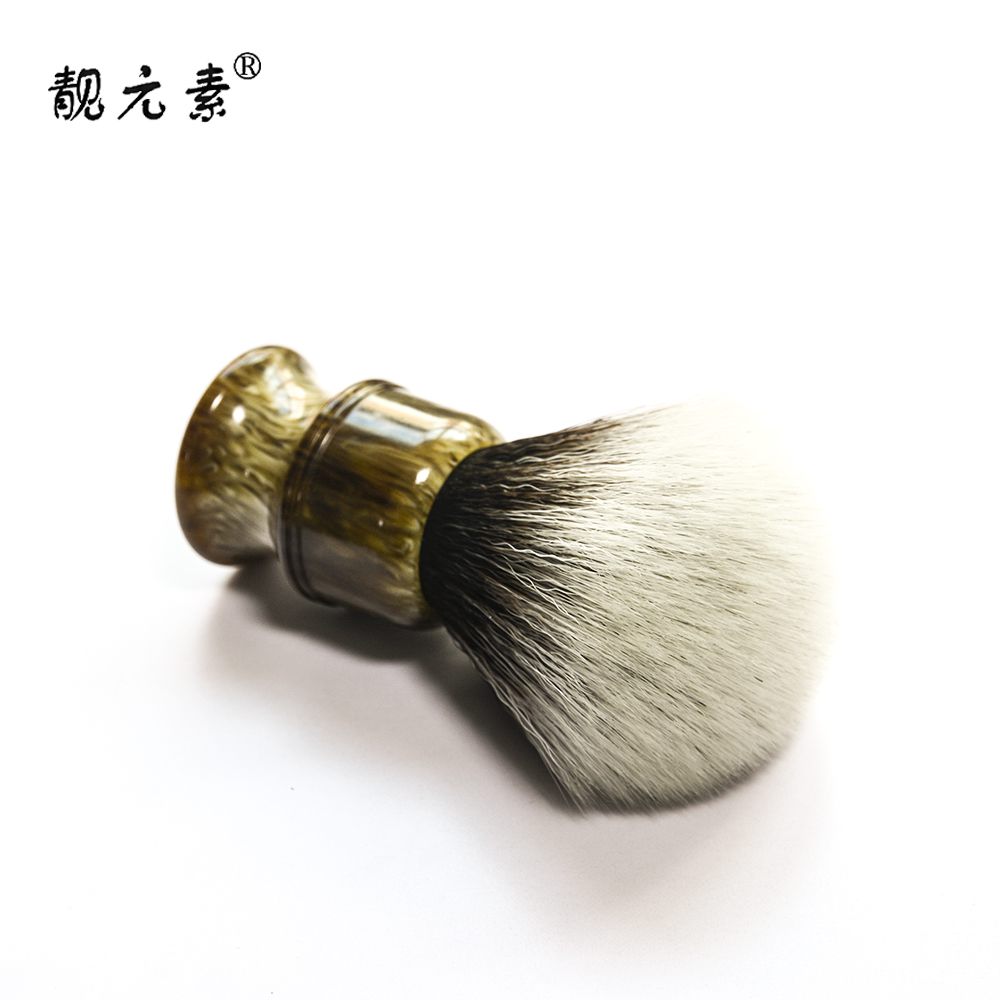
However, natural hair has limitations. Animal-derived fibers require careful maintenance (e.g., air-drying to prevent mildew) and may irritate sensitive skin due to natural oils. Additionally, ethical concerns over animal sourcing have driven demand for cruelty-free alternatives.
Vegan Brushes: Innovations in Synthetic and Plant-Based Fibers
Vegan shaving brushes, typically made from synthetic fibers (nylon, polyester) or plant-based materials (bamboo, agave), have evolved dramatically in recent years. Modern synthetic fibers are engineered to mimic the structure of natural hair: tapered tips reduce irritation, while hollow or multi-lobed cross-sections improve water absorption. For example, some vegan brushes use “silicone-treated” fibers that repel water initially but release it gradually during lathering, mimicking the moisture retention of badger hair.
In controlled tests using identical shaving soap, water temperature (38°C), and lathering time (60 seconds), top-tier vegan brushes now produce lather volumes within 10-15% of high-end badger hair models. Notably, vegan lather often has a lighter, airier texture, which some users prefer for its ease of application. Plant-based fibers, while less common, offer eco-friendly benefits, though their lather volume currently lags behind synthetics due to lower water retention.
Key Factors Influencing Lather Volume
1. Water Absorption: Natural hair’s hollow shafts hold more water, but synthetic fibers’ engineered porosity is narrowing this gap.
2. Fiber Density: Vegan brushes often have higher bristle density, which agitates soap more efficiently, compensating for lower individual fiber absorption.
3. Soap Compatibility: Natural hair works best with glycerin-based soaps, while synthetics excel with creamier formulas, as their smoother surfaces distribute product more evenly.
Conclusion: Choosing Based on Priorities
Natural hair brushes remain unrivaled for traditionalists seeking maximum lather richness and a classic shaving ritual. However, vegan brushes now offer comparable performance with added benefits: cruelty-free sourcing, easier maintenance, and suitability for sensitive skin. As fiber technology advances—with brands experimenting with biodegradable synthetics and hybrid plant-synthetic blends—the lather volume gap continues to shrink. Ultimately, the choice hinges on personal values, skin type, and lather texture preference.


